Free Bacteriostatic Water
Lab Tested and Shipped from the USA
Free Shipping on Orders Over $200
The Purest Peptides. Period.

GLP2-T

Price range: $79.00 through $140.00

GLP2-T is a cutting-edge research peptide that works on two important metabolic pathways simultaneously. By activating both GIP and GLP-1 receptors, this synthetic compound offers researchers a unique tool for studying glucose metabolism and weight management. Each vial contains pure, lyophilized powder that requires reconstitution with bacteriostatic water before use.

This product is exclusively for laboratory research and is not intended for human or animal consumption. This product is exclusively for laboratory research and not for human or animal use.

Buy 1 pieces
$79.00
Total:
$79.00
10% off
Buy 3 pieces and save 10%
$79.00
$71.10
Total:
20% off
Buy 6+ pieces and save 20%
$79.00
$63.20
Total:

Overview

GLP2-T represents a paradigm shift in dual incretin receptor pharmacology, functioning as an engineered 39-amino acid peptide with balanced GIP receptor agonism coupled to biased GLP-1 receptor activation. Unlike single-target incretin mimetics, this chimeric construct exploits synergistic GIP/GLP-1R co-activation to drive superior glucose-dependent insulin secretion while simultaneously modulating central appetite circuits and peripheral energy expenditure pathways.

The molecule’s structural architecture—a GIP backbone with C20 fatty diacid lipidation—confers albumin binding properties that extend plasma half-life to approximately 5 days, enabling once-weekly subcutaneous dosing kinetics. This pharmacokinetic profile, combined with dual-receptor signaling bias toward cAMP generation over β-arrestin recruitment at the GLP-1R, produces metabolic efficacy surpassing selective GLP-1 agonists in head-to-head clinical comparisons.

Important: This product is strictly for research purposes only. It is not approved for human or animal use and should only be handled by qualified researchers in appropriate laboratory settings.

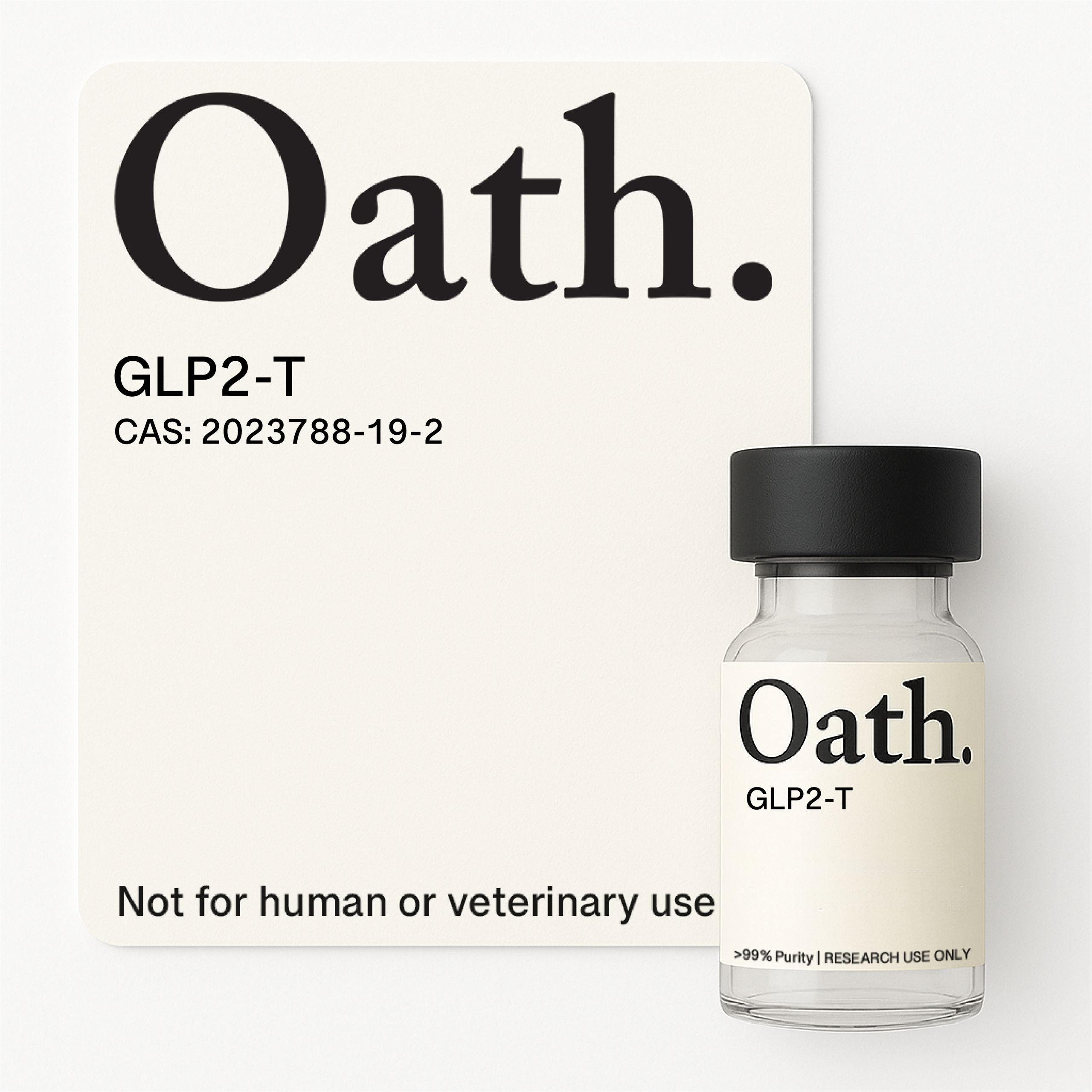
This product is strictly for research purposes only. Not approved for human or animal use.

Key Characteristics

MOLECULAR PROFILE

Formula: C225H348N60O68

Weight: 5047.61 g/mol

CAS: 2023788-19-2

Structure: 39 amino acid GIP-based peptide with C20 lipid modification

Half-life: ~5 days (albumin-bound)

PHYSICAL PROPERTIES

Form: White to off-white lyophilized powder

Solubility: Readily dissolves in water

Storage: Keep refrigerated 36‑46 °F (2‑8 °C)

Reconstitution: Mix with bacteriostatic water

Dual Incretin Receptor Mechanisms

GLP2-T exploits coordinated GIP and GLP-1 receptor activation to generate supraphysiological incretin responses. The molecule exhibits native GIP pharmacology at GIPR while demonstrating biased agonism at GLP-1R—preferentially activating adenylyl cyclase/cAMP/PKA signaling cascades while minimizing β-arrestin recruitment and receptor internalization.

GIP Receptor Signaling

Pancreatic β-Cell Actions

GIPR activation couples to Gs proteins, triggering adenylyl cyclase to generate cAMP. Elevated cAMP activates PKA and EPAC2, potentiating glucose-dependent insulin granule exocytosis. GIPR signaling is obligatory for GLP2-T’s insulinotropic effects in human islets.

Adipocyte Metabolism

GIP receptor engagement in adipose tissue modulates lipid partitioning and energy storage. While traditional models emphasized lipogenic effects, emerging data suggest GIPR activation enhances adipocyte insulin sensitivity and thermogenic capacity under specific metabolic contexts.

Central Nervous System

GIPR expression in hypothalamic appetite-regulating nuclei contributes to GLP2-T’s anorectic properties. Dual GIP/GLP-1 signaling in the brain produces synergistic effects on food intake suppression exceeding either pathway alone.

GLP-1 Receptor Signaling

Biased Agonism Profile

GLP2-T exhibits signaling bias at GLP-1R, favoring cAMP generation over β-arrestin-1/2 recruitment. This pharmacological profile prevents rapid receptor desensitization and trafficking, sustaining insulin secretory responses. β-arrestin1 normally limits GLP-1-stimulated insulin release; GLP2-T’s bias circumvents this negative regulatory mechanism.

Glucagon Suppression

GLP-1R activation in pancreatic α-cells inhibits glucagon secretion via cAMP-mediated pathways distinct from β-cell stimulation. Reduced glucagon output diminishes hepatic glucose production, contributing ~40% of glycemic improvement in type 2 diabetes models.

Gastric Motility Control

GLP-1R engagement in brainstem neurons delays gastric emptying through vagal efferent pathways. Slower nutrient delivery to the small intestine attenuates postprandial glucose excursions and prolongs satiety signaling. This effect demonstrates tachyphylaxis over 20-30 weeks but contributes meaningfully to early metabolic improvements.

SURPASS & SURMOUNT Clinical Programs

The SURPASS (type 2 diabetes) and SURMOUNT (obesity) phase 3 programs enrolled >15,000 participants across 10 randomized controlled trials, establishing GLP2-T’s superiority over selective GLP-1 receptor agonists and basal insulin in head-to-head comparisons.

SURPASS-1: Monotherapy Efficacy

478 treatment-naïve T2D patients randomized to GLP2-T (5/10/15 mg) vs placebo for 40 weeks:

HbA1c reductions: -1.87% (5 mg), -1.89% (10 mg), -2.07% (15 mg) vs +0.04% placebo
87-97% of participants achieved HbA1c <7% (vs 20% placebo)
Weight loss: -7.0 to -9.5 kg dose-dependent reduction
Superior glycemic control without background medications

Rosenstock et al., Lancet 2021

SURPASS-2: Head-to-Head vs Semaglutide

1,879 T2D patients on metformin randomized to GLP2-T vs GLP1-S 1 mg for 40 weeks:

GLP2-T 15 mg reduced HbA1c -2.46% vs -1.86% with GLP1-S (p<0.001)
Weight loss: -11.2 kg (15 mg) vs -5.7 kg GLP1-S
62% achieved dual endpoint (HbA1c <5.7% + ≥5% weight loss) vs 18% GLP1-S
Established dual-agonist superiority over selective GLP-1RAs

Frías et al., N Engl J Med 2021

SURMOUNT-1: Obesity Pharmacotherapy

2,539 adults with obesity (BMI ≥30) or overweight (BMI ≥27) with comorbidities, 72 weeks:

Mean weight reduction: -15.0% (5 mg), -19.5% (10 mg), -20.9% (15 mg) vs -3.1% placebo
89% of participants on 10 mg achieved ≥5% weight loss (vs 28% placebo)
50% achieved ≥20% weight loss on 10/15 mg doses—unprecedented in pharmacotherapy
Significant improvements in cardiometabolic markers (BP, lipids, inflammatory markers)

Jastreboff et al., N Engl J Med 2022

SURMOUNT-2: Obesity + Diabetes

938 adults with obesity/overweight and type 2 diabetes on metformin ± SGLT2i/sulfonylurea:

Weight loss: -12.8% (10 mg), -14.7% (15 mg) vs -3.2% placebo at 72 weeks
HbA1c reduction: -2.07% (10 mg), -2.11% (15 mg) vs -0.51% placebo
Dual benefit in challenging population with metabolic comorbidity
Sustained effects maintained through study completion

Garvey et al., Lancet 2023

Cardiovascular Risk Reduction

Post-hoc analysis and meta-analysis of cardiovascular outcomes across trials:

Systolic BP reduction: -5 to -8 mmHg across doses
LDL cholesterol: -7 to -10 mg/dL improvement
High-sensitivity CRP: -43% reduction (inflammatory marker)
SURPASS-CVOT outcomes trial ongoing (results expected 2024-2025)

Sattar et al., Diabetes Obes Metab 2024

Renal & Hepatic Effects

Secondary and exploratory endpoints from pooled SURPASS/SURMOUNT data:

Urinary albumin-to-creatinine ratio reduction: -27% vs baseline
eGFR preservation in participants with baseline CKD
ALT/AST reductions suggest hepatoprotective effects in NAFLD
Mechanistic studies ongoing to elucidate organ-protective pathways

Davies et al., Lancet Diabetes Endocrinol 2023

Structural & Pharmacological Insights

Cryo-EM Structural Biology

Receptor Binding Modes

Cryo-electron microscopy structures reveal GLP2-T engages both GIPR and GLP-1R through their orthosteric binding pockets in the N-terminal extracellular domain. The C20 fatty acid modification does not directly contact the receptor but positions the peptide for enhanced G protein coupling efficiency.

Transmembrane Domain Conformations

Active-state receptor structures demonstrate GLP2-T stabilizes outward movement of transmembrane helix 6, creating Gs binding interface geometry. The bias toward cAMP signaling at GLP-1R correlates with reduced conformational changes in intracellular loop 3, limiting β-arrestin recruitment.

Synergistic Receptor Crosstalk

Islet Synergy Mechanisms

Co-infusion studies demonstrate GIP + GLP-1 produce supraadditive insulin secretion (>2x individual effects). GLP2-T recapitulates this synergy in single-molecule format. Mechanistically, parallel cAMP generation from both receptors amplifies PKA-dependent phosphorylation of KATP channels and voltage-gated calcium channels, maximizing glucose-stimulated insulin secretion.

GIPR Requirement for Efficacy

Genetic ablation studies in human islets confirm GLP2-T’s insulinotropic actions require functional GIPR. In GIPR knockout models, GLP2-T loses ~60% of glucose-lowering capacity, demonstrating GIP signaling is non-redundant despite GLP-1R activation.

Adverse Event Profile

Safety data from >13,000 participants across SURPASS/SURMOUNT trials reveal class-consistent incretin adverse events, predominantly gastrointestinal:

Gastrointestinal (Most Common)

Nausea (12-18%), diarrhea (12-14%), vomiting (2-6%), constipation (5-7%). Predominantly mild-to-moderate severity, highest incidence during dose escalation, typically resolving within 4-8 weeks. Discontinuation rate: 4-7% vs 2% placebo.

Hypoglycemia Risk

Glucose-dependent mechanism results in low intrinsic hypoglycemia risk when used as monotherapy (<1%). Risk increases to 5-8% when combined with sulfonylureas or insulin. No severe hypoglycemia events in monotherapy trials.

Cardiovascular Effects

Heart rate increases: +2 to +4 bpm mean change. Mechanism likely involves increased sympathetic tone from weight loss. No increased atrial fibrillation risk observed. Blood pressure reductions (-5 to -8 mmHg systolic) likely cardiovascular-protective.

Injection Site Reactions

Mild erythema, pruritus, or induration reported in 1-3% of participants. Rotating injection sites (abdomen, thigh, upper arm) minimizes local reactions. No serious injection-related adverse events.

Thyroid C-Cell Concerns

GLP-1RAs carry theoretical medullary thyroid carcinoma risk based on rodent models. Human relevance uncertain—no increased calcitonin elevations or thyroid neoplasia in clinical trials. Contraindicated in MEN2 or personal/family history of MTC.

Rare Serious Events

Acute pancreatitis: <0.2% incidence (similar to placebo rates). Gallbladder disease: 1.5% vs 0.7% placebo, likely secondary to rapid weight loss. Diabetic retinopathy worsening: rare, associated with rapid glycemic improvement in patients with pre-existing retinopathy.

Overall discontinuation rates due to adverse events: 6-7% vs 2-3% placebo. Dose titration protocols (2.5 mg starting dose, 4-week escalation intervals) minimize GI intolerance.

IMPORTANT: This product is exclusively for laboratory research purposes and is not approved for human or veterinary use.

References

  1. Samms RJ, et al. “The incretin co-agonist GLP2-T requires GIPR for hormone secretion from human islets.” Nature Metabolism. 2023;5:1064-1078.
  2. Zhao F, et al. “Structural insights into multiplexed pharmacological actions of GLP2-T and peptide 20 at the GIP, GLP-1 or glucagon receptors.” Nature Communications. 2022;13:1057.
  3. Willard FS, et al. “Structural determinants of dual incretin receptor agonism by GLP2-T.” PNAS. 2022;119(12):e2116506119.
  4. Rosenstock J, et al. “Efficacy and safety of a novel dual GIP and GLP-1 receptor agonist GLP2-T in patients with type 2 diabetes (SURPASS-1): a double-blind, randomised, phase 3 trial.” Lancet. 2021;398:143-155.
  5. Frías JP, et al. “Tirzepatide versus Semaglutide Once Weekly in Patients with Type 2 Diabetes (SURPASS-2).” N Engl J Med. 2021;385:503-515.
  6. Jastreboff AM, et al. “Tirzepatide Once Weekly for the Treatment of Obesity (SURMOUNT-1).” N Engl J Med. 2022;387:205-216.
  7. Garvey WT, et al. “Tirzepatide once weekly for the treatment of obesity in people with type 2 diabetes (SURMOUNT-2): a double-blind, randomised, multicentre, placebo-controlled, phase 3 trial.” Lancet. 2023;402:613-626.
  8. Dahl D, et al. “The Role of Tirzepatide, Dual GIP and GLP-1 Receptor Agonist, in the Management of Type 2 Diabetes: The SURPASS Clinical Trials.” Diabetes Therapy. 2021;12:143-157.
  9. Sattar N, et al. “Cardiovascular and kidney outcomes with GLP2-T: A comprehensive meta-analysis.” Diabetes Obes Metab. 2024;26:560-571.
  10. Battelino T, et al. “Tirzepatide versus insulin degludec in patients with type 2 diabetes inadequately controlled on metformin (SURPASS-3 CGM): a multicentre, randomised, open-label, parallel-group, phase 3 trial.” Lancet Diabetes Endocrinol. 2023;11:427-438.
  11. Willard FS, et al. “Tirzepatide is an imbalanced and biased dual GIP and GLP-1 receptor agonist.” JCI Insight. 2020;5(17):e140532.
Weight 0.08 lbs
Dimensions 0.87 × 1.18 × 0.87 in
Size

10mg, 20mg, 30mg

SKU: OATH-TIRZEPATIDE Category: Tags: , ,
Updating
  • No products in the cart.